

Walk into any lighting aisle and you will see the same phrase repeated on box after box: 2,700K, 4,000K, 6,500K. Most shoppers skim straight past it and reach for the highest lumen figure instead. That is understandable, but it is also why so many British homes end up with a kitchen that feels like a dental surgery and a living room that never quite relaxes in the evening. Colour temperature is the single most useful number on a bulb, and once you understand it, you will never buy lighting the same way again.
What colour temperature actually measures
Colour temperature is measured in kelvin (K) and describes how warm or cool the light appears to the human eye. The scale runs in the opposite direction to intuition: lower numbers are warmer, higher numbers are cooler. A candle flame sits around 1,800K, a traditional incandescent bulb around 2,700K, and a bright overcast midday sky around 6,500K.
It helps to think of kelvin as a mood dial rather than a brightness dial. Two bulbs can both produce 800 lumens, yet one will make a bedroom feel like a cosy pub corner and the other like a railway platform. Brightness is measured separately in lumens, and the two figures do entirely different jobs.
- 2,200K–2,700K: Candle-warm to soft white. Golden, restful, flattering to skin tones.
- 3,000K–3,500K: Warm white to neutral. Clean but still friendly.
- 4,000K–4,500K: Cool white. Crisp, alert, faintly clinical.
- 5,000K–6,500K: Daylight. Brilliant and blue-tinged, best used sparingly indoors.
For most British homes, the sweet spot for living spaces is 2,700K, with 4,000K reserved for garages, utility rooms and task areas where you genuinely need to see detail.
Matching kelvin to the room
The most common mistake is using one colour temperature throughout the house because the boxes were bought in bulk. Rooms have different jobs, and their lighting should reflect that.
- Living rooms: 2,200K–2,700K. This is where you unwind after work, so keep it golden and low. Dimmable lamps at 2,700K are almost always the right call.
- Bedrooms: 2,200K–2,700K. Cool light suppresses melatonin and makes winding down harder. Warm bedside lamps plus a dimmable ceiling fitting work well.
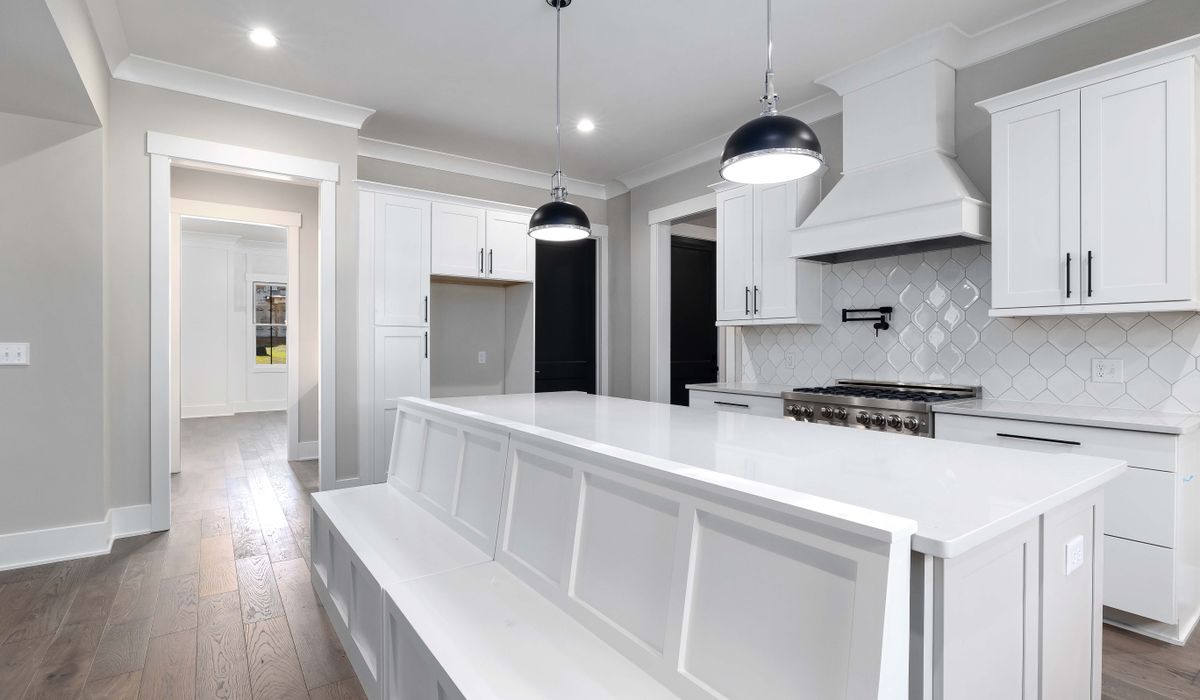
- Kitchens: 3,000K–4,000K. You need to judge whether chicken is cooked and whether the worktop is actually clean. 4,000K over the hob and sink is sensible.
- Bathrooms: 3,000K–4,000K around the mirror for accurate shaving and make-up, with a warmer option for a relaxing soak.
- Home offices: 4,000K–5,000K. Cooler light supports concentration during the working day.
- Hallways and stairs: 2,700K–3,000K. Warm enough to feel welcoming, bright enough to be safe.
If you take one rule from this article, make it this: warm where you rest, cooler where you work.
Why mixing temperatures goes wrong
Open-plan living has made colour temperature trickier. A kitchen island at 4,000K sitting six feet from a sofa lit at 2,700K creates a visible seam of colour across the room, and the eye notices it immediately even if the cause is not obvious.
The practical fix is to keep a single temperature across any space you can see in one glance, then vary brightness instead. In a kitchen-diner, 3,000K throughout is a well-judged compromise: crisp enough for chopping, warm enough for dinner. Use dimming and separate circuits to shift the mood rather than changing the colour of the light.
There is one exception worth knowing. Older halogen and incandescent bulbs warm up and shift towards amber as you dim them, mimicking candlelight. Most LEDs do not do this unless they are specifically labelled as dim-to-warm. If you want that sunset effect, look for it on the box, because standard dimmable LEDs simply get darker, not warmer.
Reading the label before you buy
Kelvin is printed on almost every bulb package, usually beside the lumens. A few other details are worth checking at the same time.
- Lumens, not watts: Since the switch away from incandescent, watts tell you about energy use, not light output. A 9W LED at 800 lumens replaces a 60W traditional bulb.
- Colour rendering (CRI or Ra): Look for 80 or above, and 90 or above in kitchens and bathrooms. Low CRI makes food and skin look dull.
- Dimmable: Only pair dimmable bulbs with a compatible dimmer switch. Mixing old dimmers with new LEDs causes flicker and buzzing.
- Beam angle: Narrow spots are for highlighting, wide floods for general light. The wrong choice makes a well-specified bulb look poor.
Buying a single bulb to test before committing to a whole room is never wasted money. Screw it in, live with it for an evening, and judge it in the dark rather than in the shop.
Common colour temperature mistakes
A few habits cause most of the disappointment. Buying 6,500K daylight bulbs because they are the brightest on the shelf is the big one; they are usually the same brightness as their warmer equivalents, just colder. Leaving a cold white bulb in a bedside lamp is another, and it is the quickest way to ruin a good night's sleep.
Mismatched lamps in the same room are a quieter problem. Two table lamps with different kelvin ratings will make one corner look yellow and the other blue. Standardise on one temperature per room and note it somewhere, so your next replacement bulb matches.
Finally, remember that paint colours change under different light. A grey that looks elegant under 2,700K can turn distinctly blue at 4,000K. If you have just decorated, check the scheme in the evening with the lights you actually use, not in daylight. Get the kelvin right and everything else — the paint, the fabrics, the mood — falls into place.






John Doe
14 January, 2022Having no content in post should have adverse..
Chauffina Carr
10 April, 2022We use these tests all time! Killer stuff!
Jim Séchen
16 July, 2022Thanks for all the comments, everyone!