

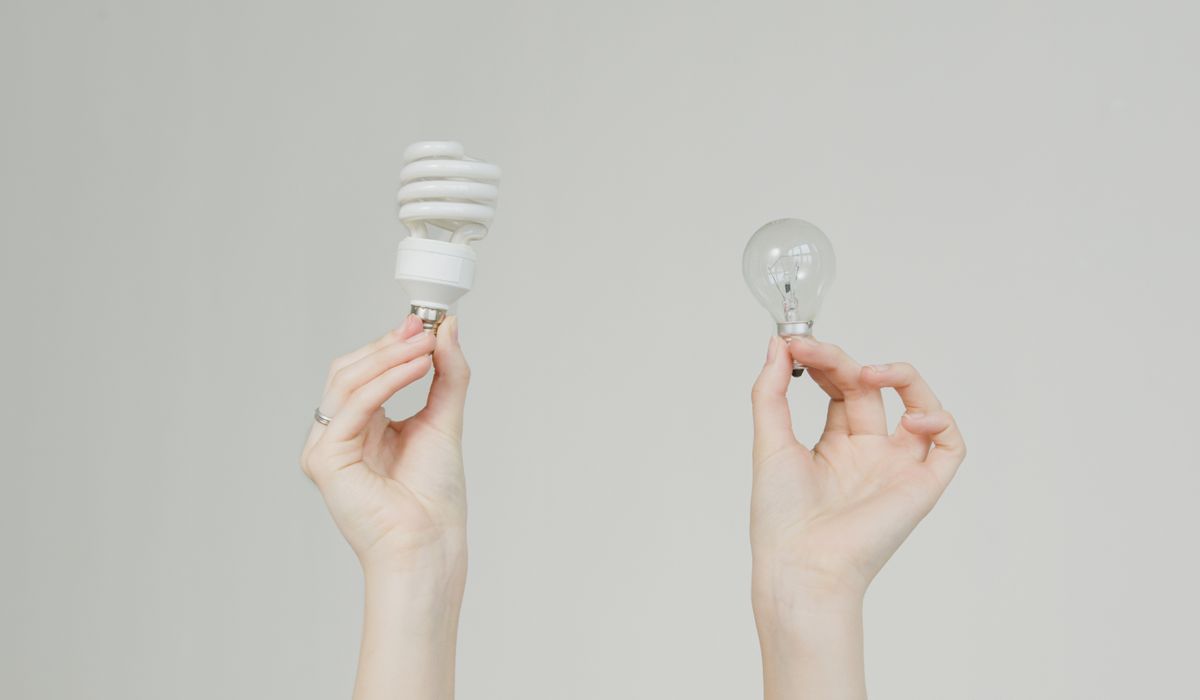
Why the last three hours of light matter
Your body clock takes its cues from light — specifically from the blue-rich, high-intensity light that tells your brain it is still daytime. Sit under a 4000K ceiling light at 10pm and you are effectively arguing with your own biology: melatonin production is delayed, you feel wired at midnight, and the morning alarm lands harder than it should. The fix is not a complete blackout after dark. It is a gradual shift — bright, cooler light early in the evening, then warmer and dimmer as bedtime approaches.
This is one of the rare bits of home improvement that is cheap, reversible and quick to set up. A handful of tunable white bulbs, a couple of lamps and a sensible schedule will do more for your evenings than most expensive gadgets.
Build three scenes, not thirty
Smart lighting apps tempt you into programming a scene for every mood. Most households end up using two or three. Start with these:
- Day — 3500–4000K at full brightness. Good for cooking, working at the kitchen table and the first hour after you get home.
- Wind-down — 2200–2700K at 30–50 per cent. Warm and comfortable, still bright enough to read or tidy up.
- Night — 1800–2000K, amber-leaning, at 1–10 per cent. This is the one that actually protects your sleep.
Name them clearly, put them on a physical switch or a bedside button, and you will use them. Anything hidden three menus deep in an app gets abandoned within a fortnight.
Room by room
Living room. Keep the ceiling light on the Day scene for early evening, then switch to two or three lamps on Wind-down. Layered low-level light — a floor lamp in the corner, a table lamp beside the sofa — reads as calmer than one bright pendant, and it costs far less to run than you might assume.
Bedroom. Ceiling lights are the enemy of a good evening routine. Use bedside lamps and a small wall light on the Night scene, and set the ceiling fitting to Wind-down only. If you read in bed, a dedicated warm lamp at 10 per cent beats a phone screen every time.
Bathroom and hallway. These are transition spaces, so set them slightly warmer than you think — 2700K in the evening, dropping to a low amber night mode. A dim, warm hallway light at 2am is far easier on the eyes than a blast of cool white.
What to buy: a practical checklist
- Tunable white, not fixed warm white. You need to shift colour temperature, not just brightness.
- Genuine deep dimming. Look for a minimum of 1 per cent; bulbs that stop at 10 per cent are too bright for a night scene.
- Warm dim behaviour. Ideally the bulb gets warmer as it dims, mimicking a filament lamp, rather than turning a flat, greyish white.
- Colour rendering of 90 CRI or above. Warm light with poor colour rendering makes skin tones and woodwork look muddy.
- Check your fittings. British homes are a mix of B22 bayonet and E27 screw caps, plus GU10 spots in kitchens and bathrooms. Measure before you order.
- Watch the switch wiring. Many older UK properties have no neutral wire at the light switch, so choose smart switches or relays explicitly designed for that setup — or keep smart bulbs and leave the existing wall switch permanently on.
- Prefer a hub-based protocol such as Zigbee, Thread or Matter over bulbs that each demand their own wi-fi connection. Your router will thank you.
Scheduling that survives real life
Automation only helps if it is forgiving. Set Wind-down to trigger about 90 minutes before your usual bedtime, and have it fade in over 15 to 20 minutes rather than snapping on — the gradual shift is what makes it feel natural. Add a Night scene that runs from that point until sunrise, and a gentle wake-up that brightens slowly over half an hour before your alarm.
Then add two overrides: a physical button that returns everything to Day if you are working late, and a simple switch-off at the wall for when you cannot be bothered. A system that fights you is a system you will switch off for good.
Small habits worth keeping
- Dim your main lights an hour before bed rather than waiting until you feel tired.
- Keep screens out of the bedroom, or at least turn on the warmest night mode earlier than you think you need to.
- Get bright light in the morning — open the curtains and use the Day scene over breakfast — to anchor the whole cycle.
- Clean your lampshades and diffusers. Dusty shades steal light, so you turn everything up to compensate.
None of this needs a full smart-home overhaul. Three scenes, a couple of warm lamps and a schedule that fades rather than snaps will change your evenings more than any app update.



John Doe
14 January, 2022Having no content in post should have adverse..
Chauffina Carr
10 April, 2022We use these tests all time! Killer stuff!
Jim Séchen
16 July, 2022Thanks for all the comments, everyone!