

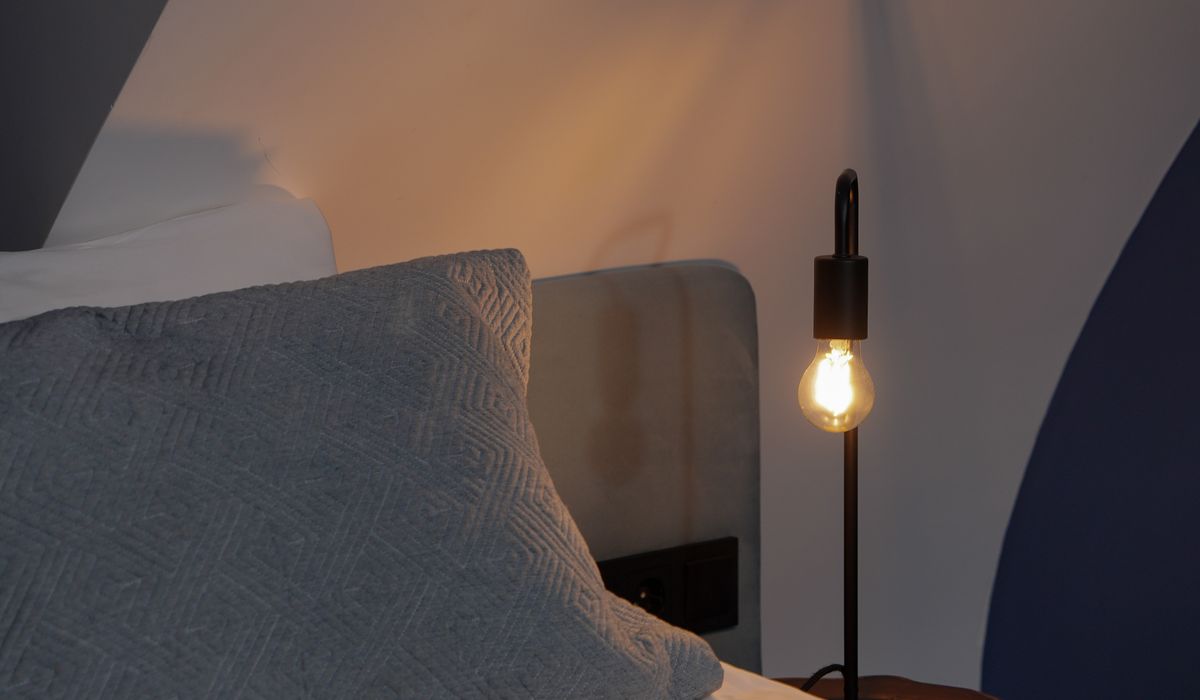
Minimalist lighting in a British home is rarely about having less light. It is about deciding where the light comes from, then hiding the hardware so the room reads as calm and uncluttered. With ceiling heights that often sit between 2.3 and 2.4 metres, sash windows, and rooms that have to work hard for their square footage, the trick is to combine slim, low-profile fittings with a few well-placed concealed sources — and to get the colour temperature and dimming right so the result feels warm rather than clinical.
Work out what each room actually needs
Before you shop, decide the job each space has to do. A minimalist scheme fails when it looks beautiful at 8pm and you cannot chop an onion at 6pm.
- Living rooms: aim for 100–200 lux of ambient light at floor level, plus a brighter pool where you read or work. 2700K is the sweet spot — warm enough to feel soft, clean enough to look modern.
- Kitchens: 300–500 lux on worktops, with light coming from above and slightly in front of you so your own shadow does not land on the chopping board. 3000K keeps food looking fresh.
- Hallways and landings: 100 lux is plenty. These are transit spaces, so light the walls and floor rather than the ceiling.
- Bedrooms: ambient at 2700K or warmer, plus a controlled reading light of around 200 lux at the book, not at the pillow.
Whichever room you are working on, look for a colour rendering index of 90 or above. It is the single most underrated number on the box: it makes skin tones, timber and paint colours look like themselves.
Slim profiles for lower ceilings
In most British homes the ceiling is the tightest dimension, so fittings need to disappear into it rather than hang from it. Recessed downlights with a 40–50mm depth and a trim of 60–80mm are easy to specify, and fire-rated versions are essential in flats or wherever there is a habitable room above. Keep them well spaced — roughly 0.8 to 1 metre apart — to avoid the scalloped "runway" effect that makes a room feel busy.
If you cannot recess, look for surface-mounted fittings under 30mm deep in the same colour as the ceiling. A matt white disc on a white ceiling is nearly invisible; a chrome ring is not. Plaster-in profiles, which are skimmed over and leave only a thin slot of light, are the neatest option of all and work beautifully along a wall to wash it evenly.
Matte finishes and quiet materials
Shiny surfaces fight minimalist interiors because they reflect light back as glare and catch every fingerprint. Choose matt white, putty, soft black, brushed brass or aged nickel instead of polished chrome, and match the finish across the room so no single fitting draws the eye.
Shades matter just as much. Opal glass, alabaster, paper, linen and plaster all diffuse light gently, which reduces harsh shadows and makes a small room feel larger. If you are keeping the fitting visible, treat it as sculpture: a slim matt black cone or a simple cylinder reads as deliberate, whereas a cluster of small decorative pendants reads as clutter.
Concealed sources that do the heavy lifting
This is where minimalist lighting earns its keep. Hidden sources give you the practical light without the visual noise:
- Cove lighting: an LED strip in an aluminium channel with a diffuser, set 100–150mm in from the ceiling edge and aimed upwards. It lifts the ceiling and provides soft ambient light.
- Shelf and alcove lighting: run strip along the front underside of a shelf, never along the back, so it lights what is on the shelf rather than the wall behind it.
- Plinth lighting: useful in hallways and along a kitchen island, marking the floor line and making a narrow space feel wider.
- Under-cabinet lighting: the single best upgrade for a British kitchen. Put it on its own switch.
Always choose 24V tape rather than 12V for runs over three metres, keep the driver accessible behind a removable panel, and buy dimmable strips if you want to change the mood at night.
Layering, circuits and controls
Three circuits in a living room — ambient, task and accent — will do more for the feel of the space than any single expensive fitting. Put the concealed strips and the main downlights on separate switches, then dim them independently.
Dimming is the most common place minimalist schemes go wrong. LEDs need a compatible dimmer; look for one described as trailing-edge or LED-compatible, check the minimum load, and buy the dimmer and the lamps as a matched pair where you can. Two-way switching on a hall, landing or long kitchen is worth the extra cable, and a simple motion sensor in a downstairs cloakroom is genuinely useful rather than gimmicky.
A practical buying checklist
- Buy by lumens, not watts. Roughly 400–500 lumens replaces an old 40W bulb.
- Stick to 2700K–3000K for living areas; avoid anything above 4000K indoors.
- Check CRI 90+ and a beam angle of 36–60 degrees for general downlights.
- Confirm the fitting is dimmable and matches your dimmer.
- In bathrooms, check the IP rating against the zone — IP44 minimum within 60cm of a basin or bath.
- Choose fire-rated downlights where required, and check insulation contact ratings if you have a cold loft above.
- Look for a five-year warranty and a replaceable driver or lamp, so a single failure does not mean a new ceiling.
Get those details right and the aesthetic almost takes care of itself: slim, matt, dimmable and thoughtfully placed, with the light arriving exactly where you need it and nothing on show that you would rather not see.



John Doe
14 January, 2022Having no content in post should have adverse..
Chauffina Carr
10 April, 2022We use these tests all time! Killer stuff!
Jim Séchen
16 July, 2022Thanks for all the comments, everyone!